Reviewing Virginia SVG for Real Projects
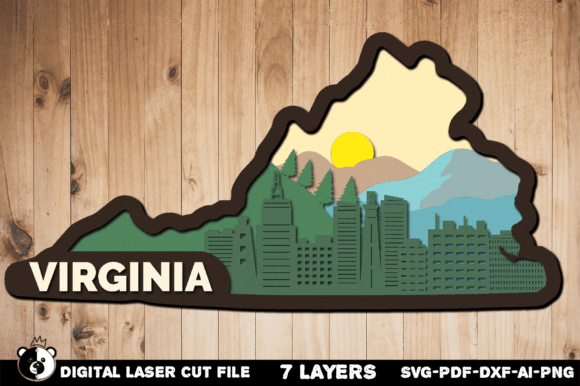
As a designer who spends hours analyzing machine embroidery design files and translating digital assets into tangible goods, I approach every new download with a mix of excitement and skepticism. When I first opened the Virginia SVG, 3D Layered Laser Cut File, my initial thought was not about stitching, but about structure. The description clearly states this is a project for the CNC, specifically designed for plywood using a vector drawing in electronic format. While this is primarily a Laser Cutting file intended for Wall Decor, the intricate layering and bold geometry of the Virginia state shape present a fascinating challenge for those of us looking to adapt it into an embroidery project.
The visual personality of this file is strong and dimensional. It relies on depth created by layers rather than complex internal detailing. For a standard digital embroidery file, this means we are looking at a silhouette that demands clean lines and perhaps a heavy use of fill stitch or satin stitch to mimic the shadow and light effects of the laser-cut wood. If you are an Etsy seller or a small shop product owner thinking about how to pivot this asset into fabric, you need to understand that the "3D" aspect comes from the stacking of materials. In embroidery, we must recreate that illusion through thread texture and placement.
Adapting Vector Layers for Textile Use
Let's talk about a real-life scenario. Imagine you are preparing a custom embroidered tote bag for a local craft fair. You want a piece that screams "Virginia pride" but feels high-end, not like a cheap souvenir. Using the Virginia SVG, 3D Layered Laser Cut File as your base, you would likely convert the vector paths into a multi-layered applique design. Instead of trying to stitch the entire state outline in one go, you could cut felt or heavy cotton in three different shades of blue or grey to represent the layers found in the original laser plan.
This approach transforms a flat graphic into a tactile handmade product. The stitch density here becomes critical. If you attempt to fill the entire area with dense running stitches, the fabric might pucker, especially on a tote bag design which often uses canvas. A better strategy is to use a border stitch to secure the applique layers, allowing the texture of the underlying fabric to peek through slightly, mimicking the gaps between laser-cut plywood layers. This creates a sense of craftsmanship that customers appreciate when they hold the finished item.
Performance on Custom Apparel and Gifts
When moving from bags to custom apparel, such as a sweatshirt or a baby onesie, the limitations of the original file become more apparent. The Virginia SVG, 3D Layered Laser Cut File is built for rigid materials. On a sweatshirt embroidery project, the stretch of the knit fabric can distort the sharp angles of the state map if the stabilizer isn't perfect. I always advise checking the hoop size carefully before committing to a client order. If the design spans too wide, the tension on the fabric will pull the edges out of shape.
For holiday embroidery or personalized gifts like pillow covers, the layered aesthetic works beautifully. Picture a navy blue pillow cover with a layered Virginia map stitched in white and gold thread. The contrast highlights the "3D" effect without needing actual depth. However, be cautious with baby embroidery. The multiple layers required to replicate the laser cut look add significant bulk. If the back of the design is too thick, it might irritate a baby's skin. In these cases, simplifying the design to a single outline with a decorative running stitch inside might be a safer, softer choice while still retaining the spirit of the original vector art.
Navigating Fabric Challenges and Design Limitations
There are specific situations where the Virginia SVG, 3D Layered Laser Cut File requires careful handling. Thin fabrics like chiffon or silk are generally poor candidates for this type of heavy, layered design. The weight of the thread needed to define the layers will overwhelm the material. Similarly, dark fabrics require precise thread colors selection; a black-on-black layered design will lose its dimensionality unless you use metallic or variegated threads to catch the light.
Curved surfaces, such as caps or hats, also pose a risk. The straight lines and sharp corners inherent in the vector cutting plan do not translate well to the dome of a cap. The distortion can make the state shape look warped. If you must use this for a cap, consider reducing the scale significantly and focusing only on the central portion of the design. Always test the design on scrap fabric first. Create a printable mockup in black and white to visualize the contrast before you even thread your machine. This step saves time and prevents wasted materials on a failed finished product.
Practical Notes for the Professional Designer
For the commercial embroidery professional, the value of this file lies in its versatility as a source of inspiration rather than a direct plug-and-play embroidery file. You cannot simply import an SVG meant for a laser cutter into most embroidery software without significant digitization work. You will need to trace the vectors, assign stitch types, and adjust underlays to ensure the design sits flat on the fabric.
Before selling any items derived from this design, confirm the licensing terms. The product description mentions the files are archived and downloadable for modification, but it does not explicitly state commercial rights for textile applications. As a craft business owner, protecting yourself legally is just as important as protecting your brand reputation. Ensure you have the right to sell personalized products featuring this artwork.
In terms of design assets, the Virginia SVG, 3D Layered Laser Cut File offers a unique geometric foundation. It encourages designers to think about texture and layering in a way that standard flat designs do not. Whether you are creating an embroidered patch for a denim jacket or a large wall hanging that combines fabric and wood elements, the core concept of layered depth is powerful.
Final Verdict on Visual Appeal and Value
Ultimately, the success of using this file depends on your ability to translate the rigidity of laser-cut wood into the softness of thread. When done correctly, the result is a sophisticated piece that stands out in a sea of generic state outlines. It enhances brand consistency for shops specializing in regional decor and boosts buyer engagement due to its unique construction.
If you are a hobbyist looking for a quick win, this might require more effort than expected. But for the experienced designer willing to invest time in digitizing and testing, the Virginia SVG, 3D Layered Laser Cut File provides a robust framework for creating high-value, memorable items. Just remember: check your stabilizer, respect the fabric limits, and always prioritize the customer's experience with the final texture of the garment. With the right execution, this design can elevate your portfolio from simple decoration to true artistry.