Polygonal Valentine Heart 3D Layered SVG Review
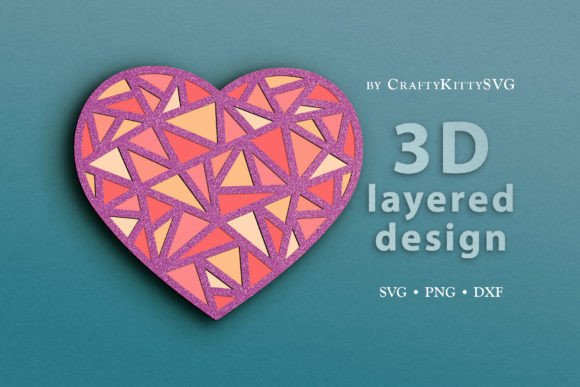
As a designer who has spent years navigating the intersection of digital assets and physical textiles, I approach every new file with a critical eye. We are not just looking for pretty shapes; we are hunting for reliability, scalability, and that intangible "finished product" feel that makes customers stop scrolling. When I first opened the archive for the Polygonal Valentine Heart 3D Layered SVG, my initial thought was about its potential in a modern, geometric aesthetic rather than traditional, soft romance. This design is distinct. It trades the classic curved heart for sharp angles and depth, creating a visual personality that feels contemporary and bold.
First Impressions: Geometry Meets Romance
The mood this design sets is immediately clear: it is structured yet affectionate. The polygonal style breaks down the organic curve of a heart into facets, giving it a crystalline or low-poly appearance. For an embroidery project, this is a double-edged sword. On one hand, the straight lines translate beautifully into satin stitches, offering a crisp, clean look that curves sometimes struggle to achieve on certain fabrics. On the other hand, the sharp corners require precision. If you are planning to use this as a machine embroidery design, you must consider how your machine handles acute angles. A well-executed stitch plan here results in a stunning, architectural piece of art, while a rushed setup could lead to puckering at the vertices.
This is not a design for a delicate, vintage-style baby blanket. Instead, it screams "statement piece." I can already envision it on a heavyweight canvas tote bag or a structured denim jacket. The 6-layer structure mentioned in the file description suggests significant depth. In a laser cutting context, these layers create a shadow box effect, but in embroidery, they imply a need for careful layering of thread colors or perhaps a combination of applique and fill stitch to mimic that 3D volume.
Real-World Application: From File to Fabric
Let's talk about a specific scenario. Imagine you are an Etsy seller preparing for the Valentine S Day rush. You want to offer something different from the standard cursive script hearts. You decide to create a line of personalized sweatshirts using the Polygonal Valentine Heart 3D Layered SVG. Because the design is vector-based, you have the freedom to scale it up significantly without losing definition. A large chest print on a crewneck sweatshirt would be perfect here. The geometric nature holds up well even at larger sizes, avoiding the muddy look that often plagues small, intricate designs when scaled up.
However, if you were to attempt this on a thin, stretchy fabric like a fitted t-shirt, you would face challenges. The density required to make those polygonal faces pop could cause the fabric to pucker. Here, the choice of stabilizer becomes critical. You cannot simply hoop the shirt and hope for the best. You would likely need a cutaway stabilizer to support the weight of the thread, especially if you are aiming for a high-density fill stitch to give the heart its body. The design works exceptionally well for items that benefit from structure: aprons, pillow covers, and even embroidered patches that can be ironed onto hats or bags.
For the small shop owner or craft business creator, the versatility of this file is a major asset. Since it comes in SVG and DXF formats, it is primarily intended for cutting machines like Cricut or Glowforge. But for us embroiderers, we can trace these vectors to create our own embroidery file or use them as a guide for free-motion stitching. If you are selling digital products, having a design that works for both Laser Cutting and embroidery allows you to market to two distinct audiences simultaneously. You can sell the physical embroidered patch and the digital file for DIY enthusiasts.
Navigating the Challenges: Where Caution is Needed
While I am impressed by the concept, practical experience dictates that we must be cautious in certain areas. First, consider the hoop size. If you are working with a smaller home machine, scaling this 6-layer design down too much will result in tiny details that get lost in the weave of the fabric. The sharp points of the polygons might turn into blobs of thread if the stitch count is too high for the available space. Always test the design on scrap fabric first. Run a mock-up in black and white to see if the contrast between the layers is sufficient before committing expensive thread.
Another area of concern is textured fabrics. If you try to embroider this on a thick fleece or a highly textured linen, the straight lines of the polygonal heart may appear wavy or uneven. The fabric texture fights against the geometric precision of the design. For the best results, stick to smooth cottons, twills, or heavy knits where the needle can penetrate cleanly. Also, be mindful of dark fabrics. To make the 3D effect visible, you will need light-colored threads with high contrast. If the background is black, a dark red heart will disappear. You might need to add a white underlay or a backing layer to ensure the thread colors stand out.
Strategic Design Notes for Professional Results
If you decide to integrate the Polygonal Valentine Heart 3D Layered SVG into your workflow, follow these professional guidelines to ensure a premium outcome:
- Test Stitch Density: Before running the final job, adjust the stitch density in your software. Too dense, and the fabric distorts; too loose, and the 3D illusion fails.
- Check Licensing: As a commercial embroidery provider, always confirm the license terms. Can you sell the finished product? Can you sell the digitized file? The product description mentions vector files, but specific usage rights for resale must be verified.
- Mockup Realistically: Use a printable mockup to visualize how the layers interact on a real object. Does the heart look flat or dimensional in the preview?
- Stabilizer Strategy: Do not skimp on stabilization. A tear-away might work for a simple patch, but a multi-layered design on a garment demands a cutaway to maintain integrity after washing.
- Fabric Selection: Avoid highly stretchy materials unless you are using a specialized stabilizer. The tension from the thread can warp the fabric around the sharp corners of the polygon.
Final Verdict: A Modern Asset for the Savvy Maker
In conclusion, the Polygonal Valentine Heart 3D Layered SVG is a strong contender for designers looking to elevate their holiday embroidery offerings. It moves away from the cliché and offers a fresh, geometric take on love. It is particularly effective for custom apparel that needs to make a statement, such as boutique branding or unique personalized gifts. While it requires a bit more technical know-how regarding stitch placement and fabric selection than a simple outline, the payoff in terms of visual appeal and perceived value is significant.
For the Etsy seller or creative entrepreneur, this design represents an opportunity to differentiate your brand. It signals attention to detail and a modern aesthetic. Just remember to respect the physics of embroidery: test, stabilize, and choose your fabric wisely. If you do, this polygonal heart will not just be another design in your library; it will become a signature element of your collection, proving that even the oldest symbols can be reinvented for the modern maker.